

If charges reach the biller three weeks after the visit, no amount of A/R follow-up fixes it. The problem happened before billing ever saw the claim.
When collections slip, the billing company is the first thing examined. Sometimes that is correct. Often the claim was created weeks after the patient was seen, and everything downstream was simply starting late.
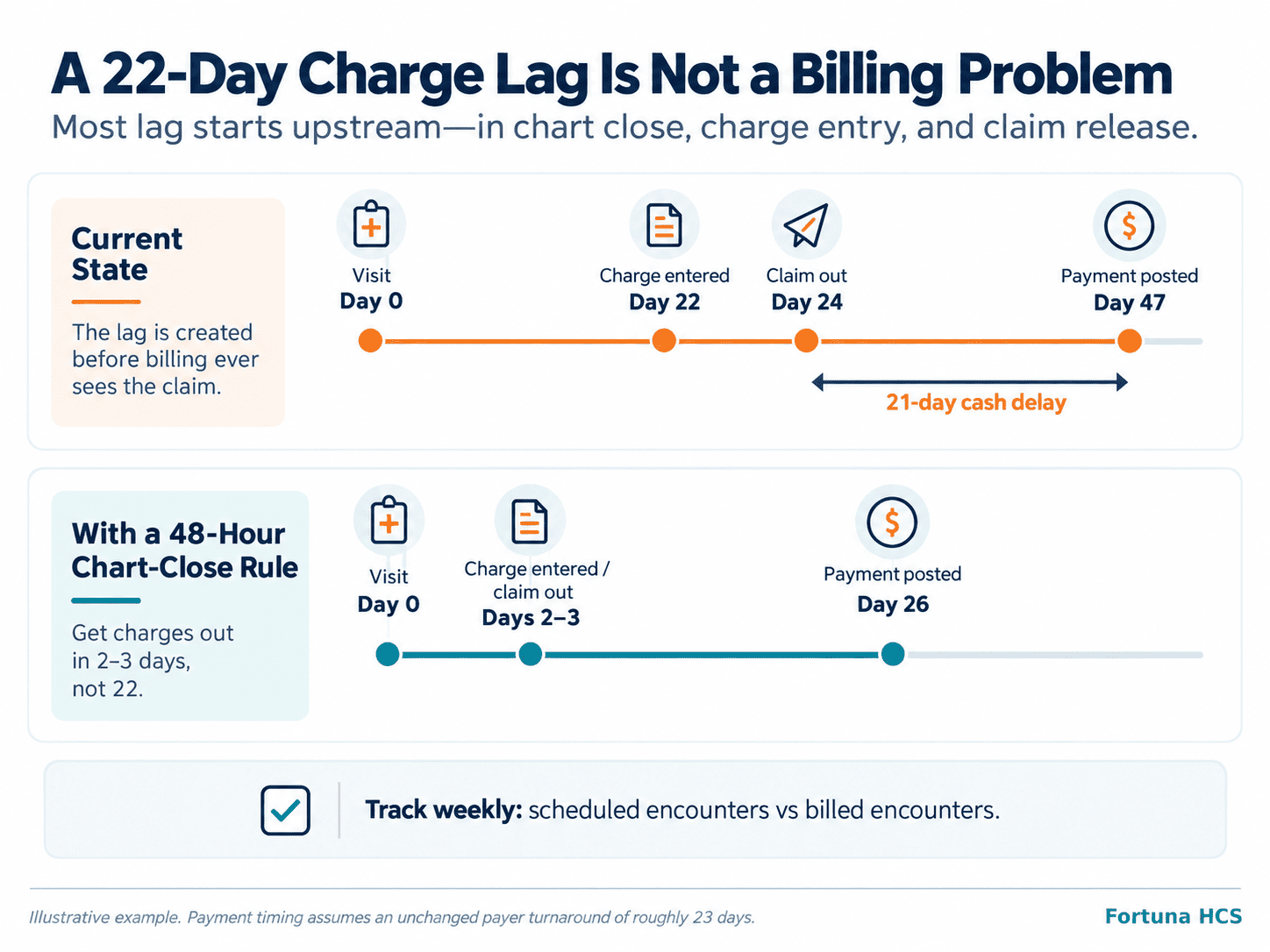
Where the Days Come From
- Notes left unsigned. Charges cannot drop until the encounter is closed, and a provider who closes charts weekly creates a week of lag before anything else happens.
- Procedures missing documentation. An injection, a study or a supply that requires a specific element, held in a queue until somebody chases it.
- Charges entered manually from a paper superbill, in batches, when somebody has time.
- Hospital and outside work captured on a list that gets reconciled at month end, if at all.
What It Costs
The obvious cost is cash. Three weeks of lag is three weeks added to every dollar's journey, permanently, because the delay repeats with each cycle rather than catching up. For a practice collecting steadily, that is an entire pay period of working capital sitting in an unbilled encounter.
The less obvious cost is risk. Timely filing windows run from the date of service, not the date the note was signed. A 22-day lag on a payer with a 90-day window leaves two-thirds of the runway for a claim that may still need a correction and a resubmission.
The Control That Catches What Reports Miss
Reconcile scheduled encounters against billed encounters, weekly. Take the completed visits on the schedule for the week, take the charges posted for those same dates, and compare the counts by provider and location.
A charge lag report shows you claims that went out late. This reconciliation shows you the encounters that never generated a charge at all, which no lag report can surface because the claim does not exist to be measured. Those are usually procedures, hospital work, injections and same-day add-ons — and they are found during an audit if they are not found during a weekly count.
What Fixes the Lag Itself
We set a 48-hour chart-close expectation as our operating target in the practices we run. It is our standard, not a regulation, and the point of it is that two days is short enough to be a habit rather than a backlog. Pair it with a daily unsigned-note report that goes to someone who follows up, and a named owner for the small number of encounters that legitimately need a hold, so a hold is a decision rather than a default.
None of this is billing work. It is clinical workflow, and it is the reason we look at charge lag before we look at the biller.
The Operator’s Check
| Measure: | Median days from date of service to charge entry, by provider |
| Owner: | Practice administrator, with each provider accountable for their own |
| Cadence: | Weekly |
| Red flag: | Any provider consistently above two business days, or scheduled encounters exceeding billed encounters for the week |
You do not need another report telling you that something is wrong. We help identify the operational cause, build the solution, and stay accountable for the result. The assessment fee is credited against your first invoice if you engage us.