

Revenue Cycle & Cash
Where the cash is won and lost — measurement, denials, aging, charge capture and patient balances.

Your Collection Rate Looks Wrong. Here Is the Number We Would Check First.
Gross collection rate tells you almost nothing, and it gets worse the moment your fee schedule changes. Here is what net collection rate measures, why it survives a repricing, and how to work it out from your own reports.
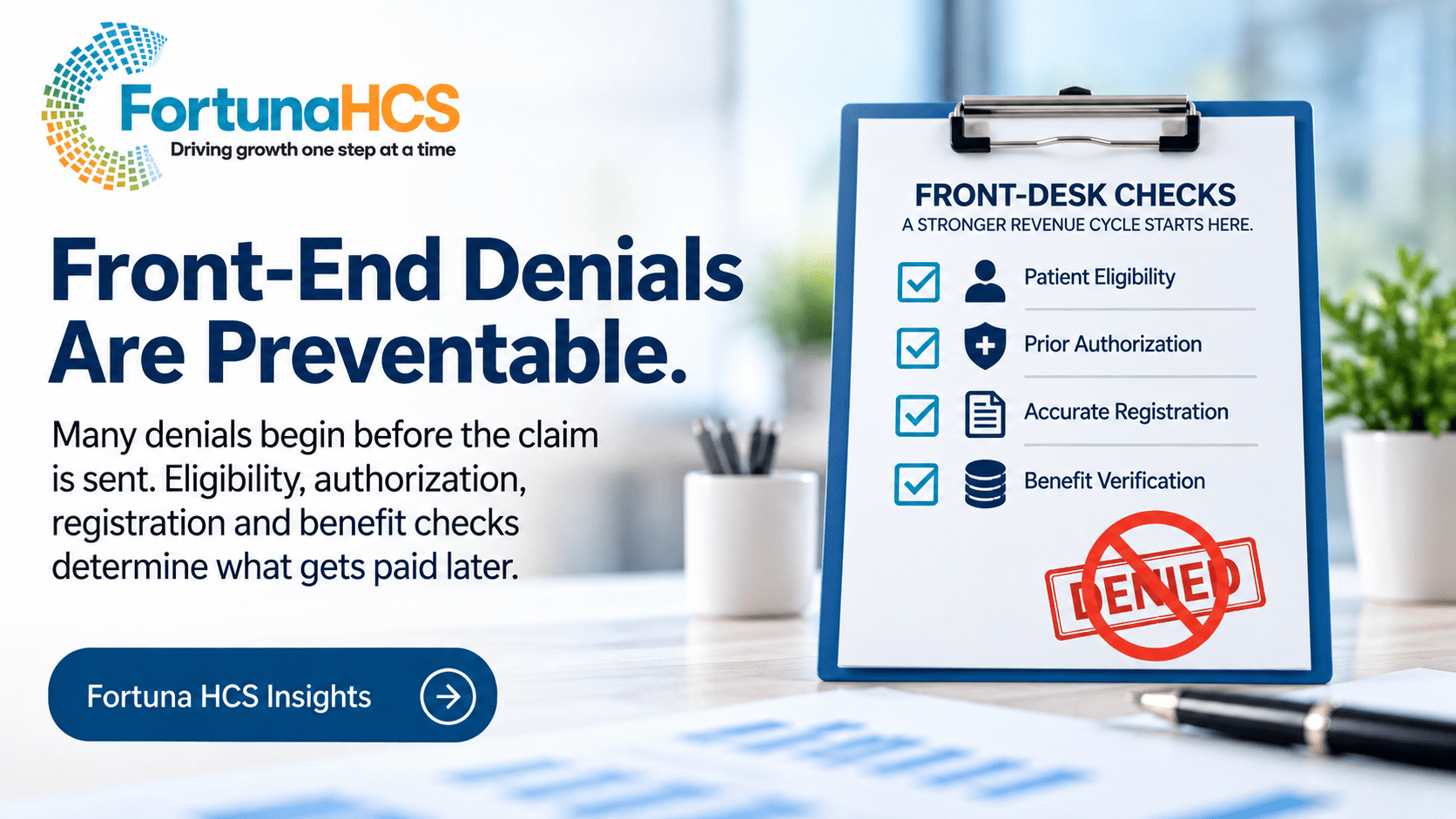
Your Denials Are a Front-Desk Problem. Here Are the Five to Look at First.
Eligibility, prior authorization, coordination of benefits, demographic mismatch and timely filing. All five get worked in billing. All five are created at the front desk.

Your A/R Is 52 Days. That Number Doesn’t Tell You Enough.
Two practices can report the same 52-day average and be in completely different trouble. The distribution is where the money is.

A 22-Day Charge Lag Is Not a Billing Problem
If charges reach the biller three weeks after the visit, no amount of A/R follow-up fixes it. The problem happened before billing ever saw the claim.

Patient Balances Are Won or Lost Before the Statement Goes Out
The best time to collect a patient balance is before the patient leaves. Eligibility, estimates and front-desk workflow determine what happens months later.
Growth & Practice Operations
Launching, scaling and getting more out of what the practice already owns.

Opening a Practice? Start Credentialing Before You Sign the Lease.
It is almost never the build-out. Payer enrollment started after the lease was signed, or a billing system configured after go-live. Here is the sequence that avoids them.
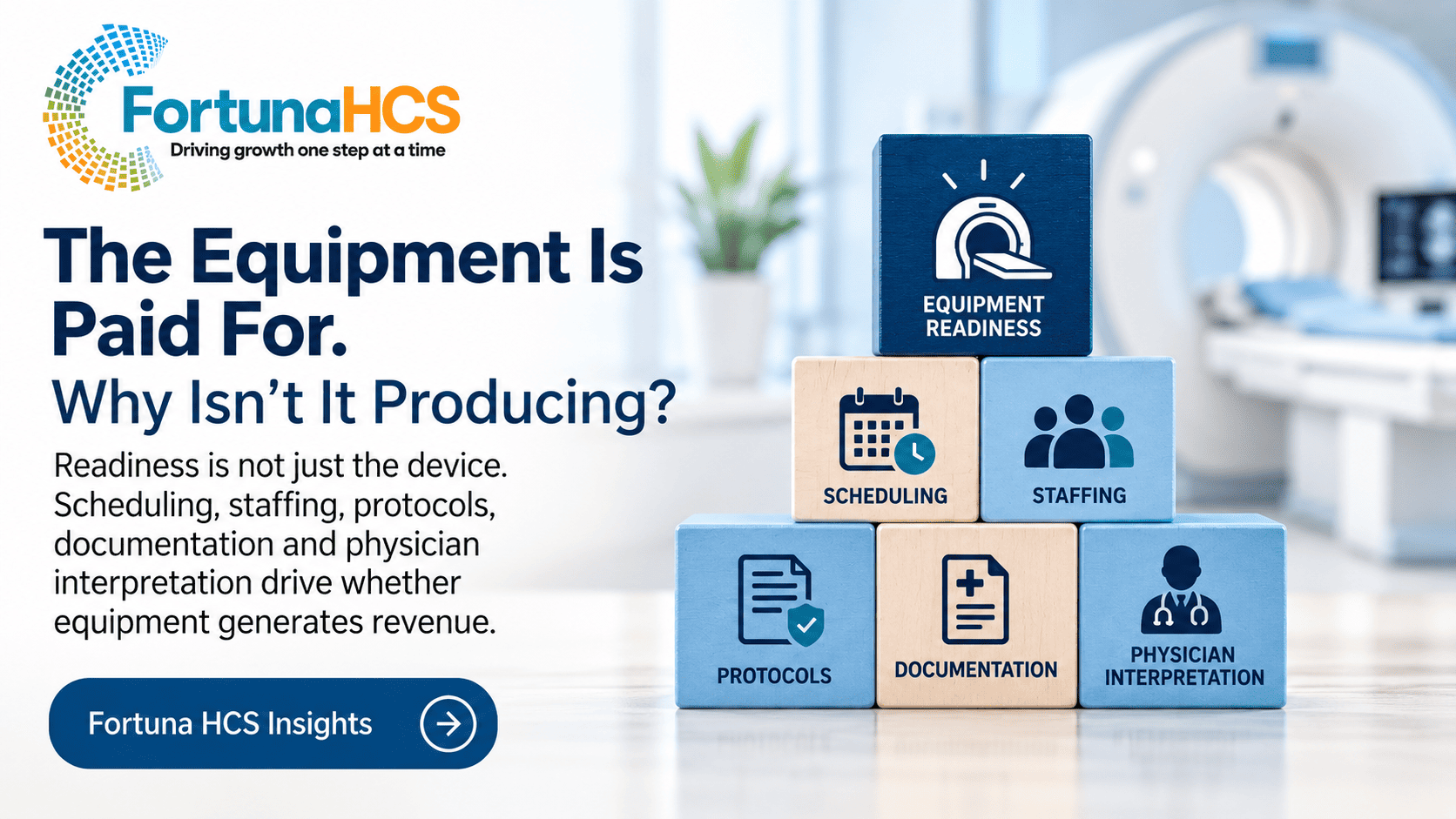
The Equipment Is Already Paid For. Here Is Why It Is Not Producing.
The EEG machine is there. The biopsy service is offered. What is missing is scheduling, documentation standards and the authorization pathway that make it payable.

Before You Recruit Another Provider, Prove You Need One
A new provider is the most expensive way to add capacity. Five numbers tell you whether you are actually out of it.

Recurring Revenue Is Not Passive Revenue: The Operating Math Behind CCM, PCM and RTM
Revenue that does not depend on clinic capacity is genuinely attractive. It is also a staffing commitment with a margin, and the margin is calculable before you start.
Payer, Data & Compliance
Contracts, reporting and the documentation that has to hold up.

When Did You Last Read a Payer Amendment?
The payer reviews your contract every year. Most practices sign once and never look at it again. That asymmetry has a price.

Three eClinicalWorks Reports Worth Reading Every Month
Most practices run reports and still cannot answer basic questions. Three reports, run the same way every month, cover most of it.

Incident-To Billing: The Revenue Is Real. So Is the Documentation Risk.
The rules changed in 2026. Where the supervising physician can be has moved. What has to be documented has not.
From the Field
Short observations from work inside physician practices.
A 22-day charge lag is not a billing problem
If the billing company receives charges three weeks after the patient was seen, no amount of A/R follow-up fixes the underlying issue. The first question is not why we have not collected. It is why the claim was not created sooner.
Credentialing is not complete when the application is submitted
For a new practice or a newly hired physician, the date that matters is not submission. It is the date the provider can see a patient and generate a collectible claim. Track to approval, not to submission.
Adding a provider does not automatically add capacity
Before recruiting another physician or APP, look at template utilization, cancellations, referral demand, exam-room capacity and existing provider productivity. Sometimes the practice needs another provider. Sometimes it needs a better operating system.
You do not need another report telling you that something is wrong. We help identify the operational cause, build the solution, and stay accountable for the result. The assessment fee is credited against your first invoice if you engage us.