


Payer Contract Negotiation
Most practices sign a payer contract once and rarely look at it again. The payer does not — rates shift through amendments, policy changes and payments that quietly fall below contract.
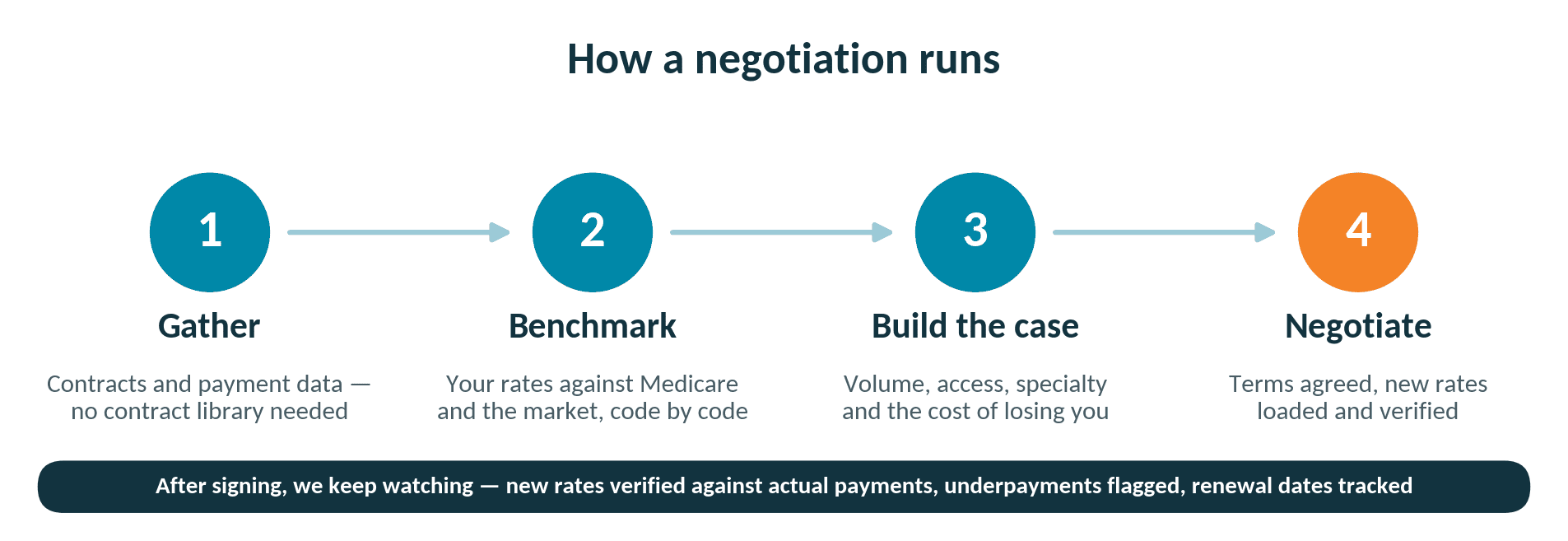
We find out what your contracts actually pay, show where you sit against the market, and negotiate from the data.
What we do
Fee schedule benchmarking
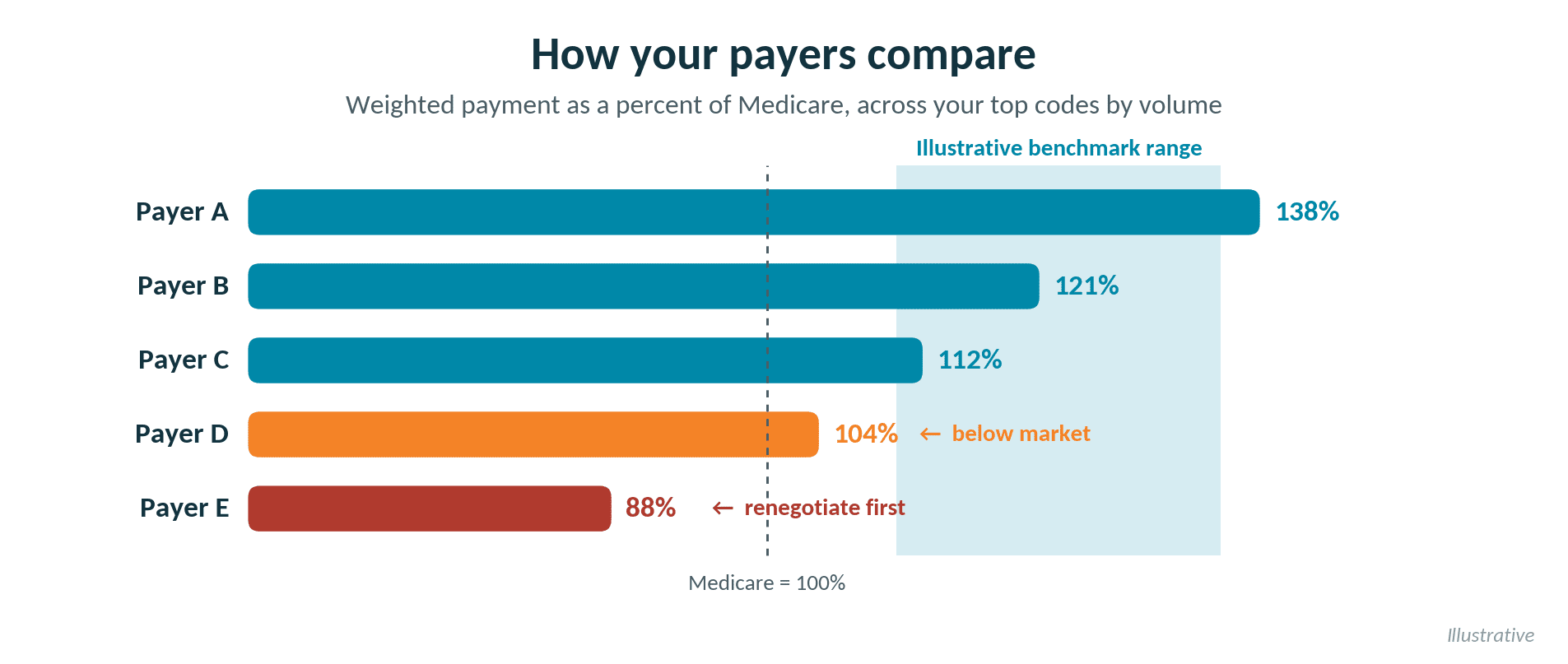
Your rates against Medicare and the market, code by code.
Underpayment detection
Payments validated against contracted rates, with underpayments identified, quantified and pursued.
Contract inventory
Every agreement and amendment in one place, with current rates on file.
Negotiation
The case prepared, the payer engaged, the new rates verified.
Managed care strategy
Which networks to join, stay in or leave.
Renewal & amendment management
Renewal dates, amendments and negotiation windows tracked before deadlines are missed.
We negotiate from actual utilization, reimbursement and payer data — not from a generic request for a rate increase.
Where practices lose money on Contracts
- Payer amendments that are not reviewed before the response or opt-out deadline
- Contracts that auto-renew without review, locking in old rates for another term
- Underpayments posted as routine adjustments and never recovered
- New rates agreed but never loaded, so nobody checks whether they are paid
What we will tell you honestly
Not every contract can be improved. Negotiating leverage can come from volume, patient access, specialty, geography and the payer's network needs. Where meaningful leverage is not there, we will say so — and focus on making sure you are paid correctly under the rates you already have.
Our assessment benchmarks your top payers and shows where you are paid below contract — or below market.